Restore Your Dog's Gut Through Fresh Food
True healing starts by restoring balance to your Dog's Elemental nature.
If you've spent any time around Dogs, you've probably noticed that the ones who seem truly well aren't just free of obvious illness — they're grounded, energetic, comfortable in their own skin, and steady in their moods. That kind of wellbeing rarely starts with a
supplement or a single diagnosis. More often, it starts in the gut.
At 5 STAR Dog, we look at gut health through two lenses at once: the physiological (what's actually happening with digestion, the microbiome, inflammation) and the Elemental (how your Dog's unique constitution shapes the way imbalance shows up in the first place). This article walks through both — why the gut matters so much more than most Guardians realize, how to recognize the signs of imbalance, and how fresh,
whole food is one of the most direct ways to restore it.
Why the Gut Matters More Than You'd Think
A Dog's gut isn't just about digestion — it's tied to their immune system, their emotional steadiness, and how grounded they feel in their body. When the gut is out of balance, it rarely stays contained to digestion alone.
Digestion and Assimilation: The True Foundation of Health
Before anything else in this article, one principle sits underneath it all: health begins with proper digestion. But digestion is only half the job. Once food is broken down, those nutrients still have to be assimilated — absorbed through the gut wall, delivered
into the bloodstream, and taken up by the cells that actually need them. A Dog can eat a nutritionally complete diet on paper and still fall short at the cellular level if assimilation isn't happening properly.
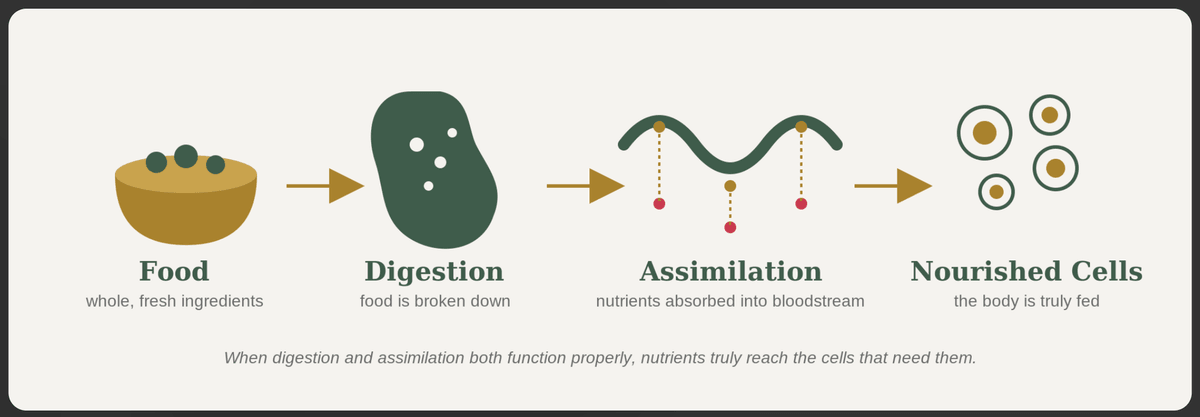
When digestion or assimilation breaks down, the result is malabsorption — nutrients pass through largely unused rather than reaching the cells. Cells starved of proper nutrients cannot function, repair, or defend the body as they should, and over time this shows up as exactly the kind of issues covered throughout this article: poor coat and
skin, low energy, weakened immunity, slow healing, and chronic disease that
seems to have no clear cause.
Every other point in this article — the microbiome, the immune connection, inflammation, Dampness — ultimately comes back to this foundation.
Restoring a Dog's gut means restoring both digestion and assimilation together, not just one or the other.
Your Dog's Immune System Lives Largely in the Gut

An estimated 70–80% of your Dog's immune system lives in gut-associated lymphoid tissue (GALT) —specialized immune cells lining the digestive tract. This tissue does more than defend against pathogens; it's where immune cells learn the difference between
real threats and harmless substances like food proteins and everyday environmental exposure. When the gut is out of balance, that education process breaks down, and the immune system can become either underprepared for real threats or prone to overreacting to harmless ones — which is often where chronic allergies and sensitivities take root.
The Microbiome Is the Foundation
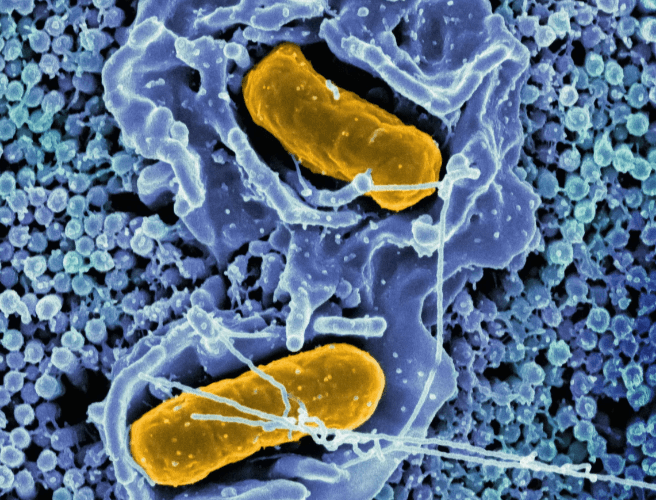
The trillions of bacteria living in your Dog's gut shape far more than stool quality — they influence nutrient absorption, skin and coat health, immune resilience, and inflammation levels throughout the body. Kibble and processed treats can quietly erode this microbial balance over time.
Antibiotics are especially disruptive — wiping out beneficial bacteria alongside the harmful ones and leaving the gut vulnerable to yeast overgrowth, poor digestion, and weakened immunity long after the course ends. Fresh, whole food is one of the most direct ways to rebuild what's been lost, feeding the beneficial bacteria your Dog
needs to truly thrive rather than just get by.
Beneficial gut bacteria don't just help break food down — they actively manufacture nutrients your Dog's body depends on. Certain bacterial strains synthesize vitamin K, essential for normal blood clotting, and a range of B vitamins, including B12, biotin,
riboflavin, and folate, which support energy metabolism, nerve function, and
healthy cell division.
Some gut bacteria also produce GABA, a calming neurotransmitter that plays a direct role in nervous system regulation —another thread in the gut-brain connection covered below.
Certain strains can even synthesize amino acids, the building blocks of protein, supplementing what comes from diet alone. When the microbiome is depleted by a processed, low-diversity diet, this internal nutrient factory produces far less — meaning
a Dog can eat a "complete and balanced" food and still fall short of what a healthy gut would otherwise generate for it.
Short-Chain Fatty Acids Keep the Gut Lining Strong
When beneficial gut bacteria ferment fiber from whole food, they produce short-chain fatty acids (SCFAs) like butyrate — compounds that directly fuel the cells lining the colon, help maintain a strong gut barrier, and reduce inflammation throughout the body. A diet lacking in fibrous, varied whole foods gives the gut far less raw material
to produce these protective compounds, which is one concrete reason a single
static kibble formula tends to fall very short over time.
The Gut and the Nervous System Are Deeply Linked
Anxious, reactive, or easily overwhelmed Dogs often carry that imbalance in their gut as much as their mind— the gut-brain connection runs both ways.

A meaningful share of the body's serotonin, a key mood-regulating chemical, is actually produced in the gut,
which helps explain why digestive upset and behavioral unease so often travel
together. A Dog under chronic stress can develop digestive upset, and a Dog
with an unsettled gut can become more anxious, clingy, or reactive as a result.
Restoring gut balance often brings a calmer, more grounded Dog alongside a
steadier stomach.
Yeast Overgrowth Is More Common Than Most Guardians Realise
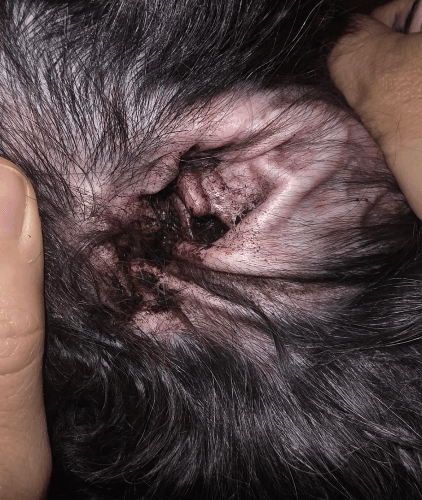
A diet heavy in carbohydrates and processed ingredients feeds yeast in the gut, which can show up as itchy paws, ear infections, a musty odor, or skin that never quite clears up. Rebalancing the gut through fresh food starves out excess yeast rather than
just treating the symptoms on the surface.
Leaky Gut: When the Barrier Breaks Down
Under chronic stress from poor diet, infection, or overmedication, the gut lining itself can become more permeable — a condition often called "leaky gut." When this barrier
is compromised, bacteria, undigested food particles, and toxins that should
stay contained in the digestive tract are able to pass into the bloodstream,
provoking the kind of widespread inflammation and immune overreaction described
above. This is frequently the underlying mechanism behind the histamine and
allergy responses covered next.
Histamine and Allergy Responses Often Start in the Gut
When the gut lining is compromised, it can trigger an overactive histamine response — showing up as itching, hot spots, watery eyes, red raw paws, pink-tinged skin, or
seasonal-looking allergies that never fully resolve.
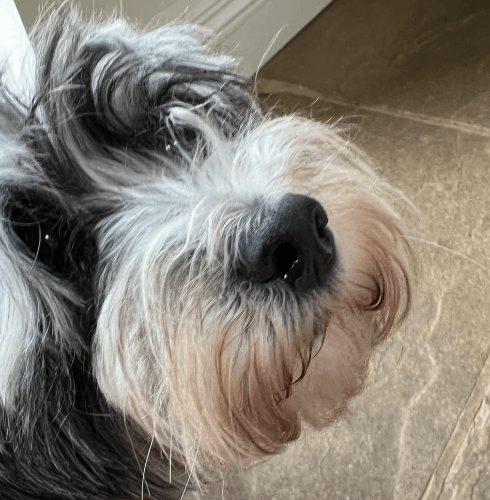
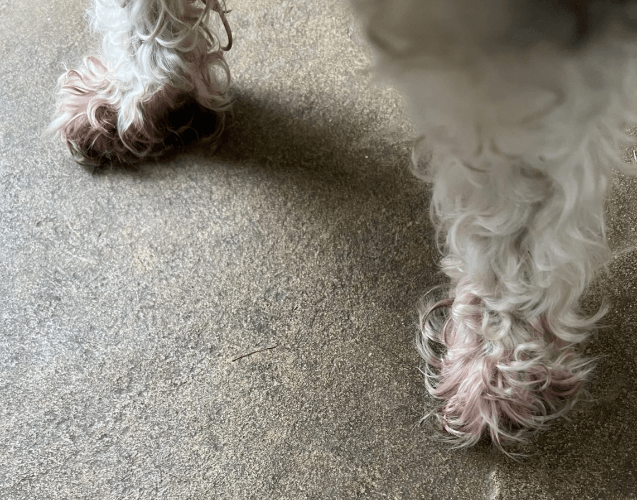
Supporting gut integrity through fresh food is often the missing piece behind allergies that don't respond to the usual approaches.
In Elemental Terms, This Often Shows Up as Dampness
Dampness builds up from toxin accumulation driven by ultra-processed food and sugars, overwhelming the gut and placing extra strain on the body's fluid systems — circulation, lymphatic drainage, and glandular balance — so toxins aren't cleared as they should be.
This settles into loose stool, bowel mucous, a heavy or sluggish energy, and a
Dog who seems puffy or waterlogged rather than lean and vital. Clearing Dampness through the right fresh food choices is often central to restoring a Dog's true condition.
Kibble's Dental Benefits Are a Myth
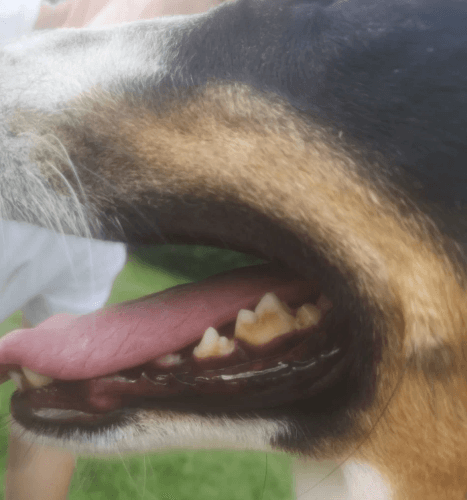
Kibble shatters rather than cleans, and its starch content feeds the bacteria behind plaque, tartar, and gum disease — issues that then feed back into the gut as bacteria are swallowed and inflammation spreads. Fresh, whole food (including appropriate raw bones) supports both a cleaner mouth and a healthier gut.
Fresh food Variety Supports Microbiome Diversity
A diverse gut microbiome is a resilient one, and research points to dietary variety — rotating tolerated proteins and vegetables over time in line with the Dog's Element — as one of the simplest ways to support that diversity, rather than feeding the exact same formula every single day.
Kibble doesn't just fail to support a healthy gut — it can actively work against it.
A single, static, processed formula gives the gut almost none of the fiber diversity it needs to feed protective bacteria like Faecalibacterium and Blautia, species closely tied to a calm, well-functioning gut lining. Fed meal after meal for years, that lack of diversity leaves the gut running on empty.
At the same time, low-diversity, heavily processed diets are linked to a shift toward the
bacterial profile seen in canine dysbiosis — including a rise in Sutterella, a genus found significantly more often in dogs with diarrhea and inflammatory bowel disease. Sutterella is associated with gut inflammation and disrupted digestive function, and it's one of the markers used in the Dysbiosis Index to flag a gut that's out of balance. Put plainly: it isn't just that kibble fails to feed the good bacteria your Dog needs — over time, it can tip the scales toward the bacteria most closely tied to gut disease.
Bowel Nosodes: An Elemental Homeopathy Perspective
Long before the microbiome could be mapped by genetic sequencing, homeopathic researchers were already studying the link between gut bacteria and chronic disease. In the 1920s, Dr. Edward Bach identified non-lactose-fermenting bacteria in the gut and began preparing homeopathic remedies from them, known as the Bowel Nosodes. His
colleague John Paterson, a microbiologist, continued this research alongside his wife Elizabeth through the 1950s, mapping specific gut bacteria to the remedies that most reliably supported a patient's recovery.
Veterinary homeopath John Saxton later brought this work into animal practice, documenting how Bowel Nosodes can support Dogs working through chronic, deep-seated imbalance — cases where digestive issues persist alongside skin, behavioral, or immune symptoms that don't fully resolve through diet changes alone. Within the 5 STAR Elemental Homeopathy approach, Bowel Nosodes are one of the tools we may draw on to support a Dog's gut rebalancing at a deeper, constitutional level, alongside fresh food.
Bringing It All Together
Taken together, these threads —an under-supported immune system, a depleted microbiome, a dysregulated nervous system, yeast overgrowth, a compromised gut barrier, histamine flare-ups, Dampness, and dental decline — rarely show up in isolation. They tend to compound, each one making the others harder to resolve. And underneath all of them sits the same foundation: without proper digestion and assimilation,
nutrients never reach the cells that need them, no matter how good the diet
looks on paper. That's exactly why a piecemeal fix (a new treat, a different
kibble, a course of antibiotics) so often falls short: while leaving the terrain — and the digestive foundation beneath it —untouched.
Fresh, whole food is the one intervention that works on all of these threads at once — rebuilding the microbiome, feeding gut-strengthening short-chain fatty acids, calming
inflammation, easing the nervous system, and clearing Dampness — because it
addresses the terrain itself rather than chasing individual symptoms. For Dogs
carrying deeper, more chronic imbalance, this can be supported further through
Elemental Homeopathy tools like the Bowel Nosodes and constitutional patterns alongside the dietary work.
Ready to Start Your Dog's Transition?
You don't have to work out afresh food transition on your own, or guess at what your Dog's gut actually needs. 5 STAR Dog's consultations are built to identify exactly where your Dog's imbalance sits — physiologically and Elementally — and guide you through
a safe, thoughtful transition to fresh food from there.
Apply for your consultation and take the first step toward restoring your Dog's gut, naturally.